- 1Movie Overview
- 2Direction & Cinematography
- 3Cast & Performances
- 4Character Psychology
- 5Themes & Emotional Depth
- 6Memorable Scenes & Dialogue
- 7The Ending — Does It Deliver?
- 8What Works
- 9Honest Criticism
- 10How It Compares
- 11Legacy & Cultural Impact
- 12Behind the Scenes
- 13Who Should Watch It?
- 14Final Verdict
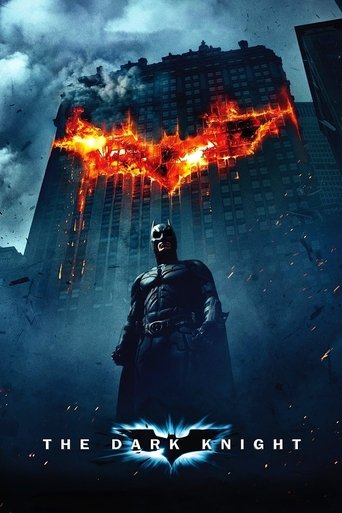
- Genre: Action, Crime, Thriller
- Director: Christopher Nolan
- Year: 2008
- Runtime: 2h 32m
- Language: English (EN)
- TMDB Rating: ⭐ 8.5/10
Movie Overview
Christopher Nolan’s The Dark Knight begins with a bank heist so clean and nerve-wracking it feels like a Michael Mann crime flick. It tells you everything you need to know about the new villain in Gotham: he’s a planner who loves a punchline. Bruce Wayne, with help from Lt. Jim Gordon and the idealistic new District Attorney Harvey Dent, thinks he can finally hang up the cape. Their coordinated assault on the mob is working. What they aren’t ready for is an opponent who doesn’t want money or power—he just wants to prove a point.
The Joker arrives and offers Gotham’s criminals a simple deal: let me handle Batman. His methods are theatrical and brutal, escalating from robberies to bombings with terrifying speed. Batman, Dent, and Gordon form an uneasy alliance to stop him, but the Joker’s real target isn’t Batman’s life. It’s his symbol. Every move is designed to force Batman, and the city, into an impossible moral choice. The plot becomes a series of grim ethical tests, each one raising the stakes.
Harvey Dent’s journey is the film’s tragic backbone. He’s the ‘white knight’ Gotham can celebrate in the daylight, the man Bruce hopes can make his violent vigilante obsolete. The Joker sees Dent’s purity as the ultimate challenge. I kept waiting for Dent to be the hero Gotham needed, and the film slowly, painfully shows why that hope was always fragile.
Nolan weaves these three stories—Batman’s war, Dent’s fall, Gordon’s quiet duty—into a sprawling urban tragedy. It’s a crime saga where the final heist is the city’s soul.
Direction & Cinematography
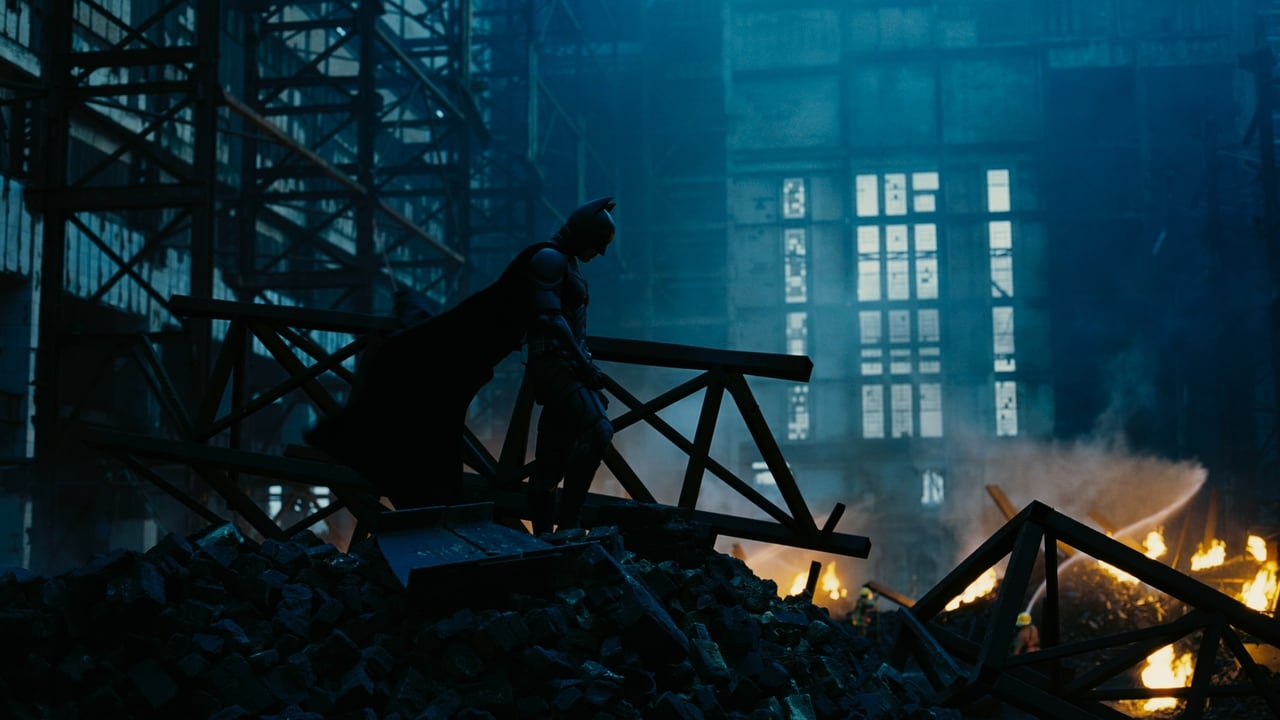
Nolan treats Gotham less like a comic book city and more like a modern Chicago, all glass, steel, and shadows. The IMAX footage, especially in the Hong Kong extraction or the semi-truck flip, gives the action a terrifying physical weight. You feel the crunch of metal.
But his real direction choice is in the pacing. This isn’t a typical superhero three-act structure. It’s a pressure cooker. The Joker announces a new atrocity, our heroes scramble to stop it, and the consequences ratchet up the tension for the next one. There are no breathers. The momentum is relentless, which makes the few quiet scenes—like Alfred’s story about the bandit—feel like precious, heavy anchors.
What struck me on rewatch is how Nolan uses sound, or the lack of it. The muffled, underwater audio in the armored car chase right before the explosion, or the dead silence following a major character’s death. He doesn’t underline the emotion with music; he often lets the horror sit in quiet. It’s a brave choice for a blockbuster.
Cast & Performances
Heath Ledger’s Joker is a collection of unsettling physical tics—the constant lip-licking, the slouched, relaxed posture in moments of extreme violence. He delivers the ‘Why so serious?’ line not as a shout, but as a wet, whispered threat. It’s a performance built on unpredictable calm. I’ll admit I didn’t expect the humor he finds in the role; the slow clap in the jail cell is genuinely funny, which makes him even more disturbing.
Christian Bale’s Batman is all contained fury, but his Bruce Wayne here is more interesting. You see the exhaustion and doubt creeping in. Watch his face in the fundraiser scene when Dent saves Rachel; it’s a flicker of relief mixed with painful jealousy. The growl as Batman can be a bit much, but it works for a man trying to be a monster.
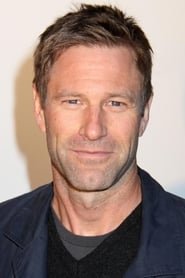
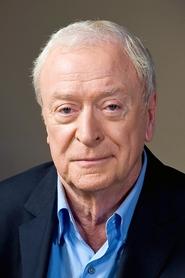
Aaron Eckhart sells Harvey Dent’s transformation completely. His early scenes have a slick, TV-ready charm that makes his idealism believable. His downfall isn’t a cartoon; it’s the slow corrosion of a good man who believed too absolutely in order. Michael Caine’s Alfred provides the film’s moral center, and his final line to Bruce is delivered with a quiet pain that stayed with me after the credits.
Character Psychology
Bruce Wayne wants to stop being Batman. His surface goal is to create a hero Gotham doesn’t need—Harvey Dent. What he actually needs is to understand that the symbol he created has consequences he can’t control. He needs to accept that being a hero might mean sacrificing not just his life, but his reputation.
He’s self-aware enough to see the trap, but he thinks he can outsmart it. He can’t. The Joker proves that Batman’s very existence creates the chaos it tries to stop. Bruce’s change is a grim acceptance. He doesn’t get to win; he only gets to choose what kind of loss Gotham can survive.
Themes & Emotional Depth
The film is about the messy, brutal cost of order. The Joker isn’t trying to win a war; he’s trying to prove that everyone, when pushed, is as ugly as he is. His experiments on the two ferries or with Harvey Dent are all in service of this one idea: morality is a luxury. Batman, Gordon, and Dent are trying to prove him wrong, but the price for doing so is almost everything they hold dear.
It’s also about the lies we need. The final act hinges on the idea that a noble lie—a story that protects people from a terrible truth—is sometimes the only just thing left. The film asks if it’s better to be a hero in the light, or a watchful protector in the dark. It comes down hard on the side of the dark, and that’s what gives it its weight.
Memorable Scenes & Dialogue
The opening bank heist is a perfect short film. Nolan establishes the Joker’s modus operandi through his henchmen: each one eliminates the other, thinking they’re ahead. The clinking of the grenade pins as a threat, the school bus crashing through the wall—it’s efficient, darkly funny, and tells you this villain operates by a ruthless, theatrical logic.
The interrogation scene is a masterclass in shifting power. Batman starts in control, beating the Joker in a soundproof room. But with every punch, the Joker just laughs harder, revealing he’s manipulated Batman into exactly the position he wanted. Ledger’s calm, almost bored delivery as Bale loses his cool completely flips the scene. The power isn’t in the fists; it’s in the mind game.
Harvey Dent’s coin flip in the hospital. The slow, quiet conversation with Gordon, the way the half-scarred coin catches the light. It’s the moment a broken man decides to make his pain the world’s problem. Eckhart plays it with a terrifying, serene sadness.
The Ending — Does It Deliver?
The ending is earned, but it’s a pyrrhic victory. After the physical climax on the ferries, the emotional climax is Harvey Dent’s rampage. It’s surprising not in its event, but in its intimacy—it’s a small, personal tragedy that forces a huge, public lie. Batman doesn’t defeat the Joker’s ideology; he just contains one man.
Personally, I think the final montage—Gordon smashing the Bat-Signal, Batman running from the dogs—lands perfectly. It leaves you with a feeling of solemn duty, not triumph. Gotham is saved, but its hero has to become a villain to do it. It’s a downbeat, mature conclusion that most films of this scale wouldn’t dare.
What Works
Heath Ledger’s performance is the obvious engine, but what makes it work is how the film builds its entire moral structure around him. The Joker isn’t just a villain; he’s a walking argument. The gritty, practical action—like the flipping semi-truck—gives the stakes a tangible weight missing from CGI-heavy fights. And the commitment to a tragic, almost Shakespearean arc for Harvey Dent elevates the whole story from a good vs. evil battle into a genuine tragedy about corrupted ideals.
Honest Criticism
The third-act pivot to Two-Face, while emotionally earned, feels like a compressed epilogue after the monumental Joker conflict. His rampage is powerful, but it happens fast. Also, Batman’s sonar surveillance technology subplot, where he spies on all of Gotham, is a fascinating ethical dilemma that the film introduces and then largely drops without a true reckoning. It bothered me slightly that such a big violation is treated as a simple tool and not a major character flaw.
How It Compares
Compared to Batman Begins, this is less an origin story and more a sprawling crime epic. It loses the tighter, personal focus on Bruce’s fear, but gains a massive, philosophical scale. Against later superhero films like Avengers: Endgame, The Dark Knight wins on moral complexity and sheer tension, but it doesn’t have that film’s cathartic, crowd-pleasing joy. It’s closer in spirit to heat than to Iron Man—a cops-and-robbers story where the robbers have a nihilistic philosophy degree.
Legacy & Cultural Impact
The film was a cultural phenomenon, earning over $1 billion and setting a new bar for superhero films as serious drama. Heath Ledger posthumously won the Oscar for Best Supporting Actor, a rarity for the genre. Critically, it sits at a 94% on Rotten Tomatoes and is often cited in ‘best of the century’ lists.
Its legacy is twofold: it proved a comic book movie could be a Best Picture contender (it likely prompted the Oscars to expand the category), and it permanently shifted the tone of blockbuster filmmaking towards a darker, more realistic grit. Every ‘grim and gritty’ reboot for a decade afterward was chasing this film’s shadow.
Behind the Scenes
Heath Ledger largely developed the Joker’s voice and mannerisms himself, locking himself in a hotel room to create the character’s psychology. The ‘pencil trick’ magic was real—Ledger actually performed it. Maggie Gyllenhaal replaced Katie Holmes as Rachel Dawes between films, a recast Nolan addressed directly by having characters comment on her changed appearance.
Who Should Watch It?
Viewers who love crime thrillers with moral complexity and breathtaking practical action will find this is their superhero movie. Anyone looking for a fun, colorful comic book escape or a straightforward heroic victory should look elsewhere—this is a long, tense, and often bleak experience.
Final Verdict
The Dark Knight remains a landmark. It’s not a perfect film—the final act has some narrative whiplash—but its ambitions and execution reshaped what a blockbuster could be. I’d rate it an 8.2 because, while its themes are heavy and its runtime demands patience, the experience is utterly commanding. Watch it for Heath Ledger, but stay for the film’s unwavering, grim conviction that no good deed goes unpunished.
More details, ratings, and cast information on IMDb, TMDB, Wikipedia. Watch the official trailer on YouTube →