- 1Movie Overview
- 2Direction & Cinematography
- 3Cast & Performances
- 4Character Psychology
- 5Themes & Emotional Depth
- 6Memorable Scenes & Dialogue
- 7The Ending — Does It Deliver?
- 8What Works
- 9Honest Criticism
- 10How It Compares
- 11Legacy & Cultural Impact
- 12Behind the Scenes
- 13Who Should Watch It?
- 14Final Verdict
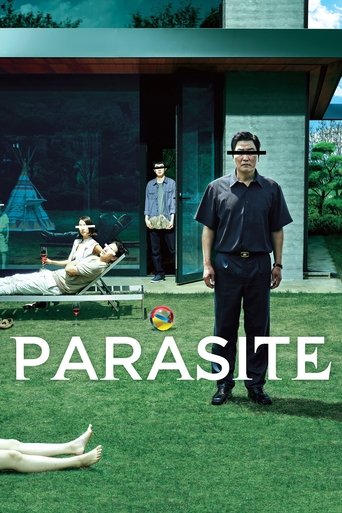
- Genre: Comedy, Thriller, Drama
- Director: Bong Joon Ho
- Year: 2019
- Runtime: 2h 13m
- Language: Korean (KO)
- TMDB Rating: ⭐ 8.5/10
Movie Overview
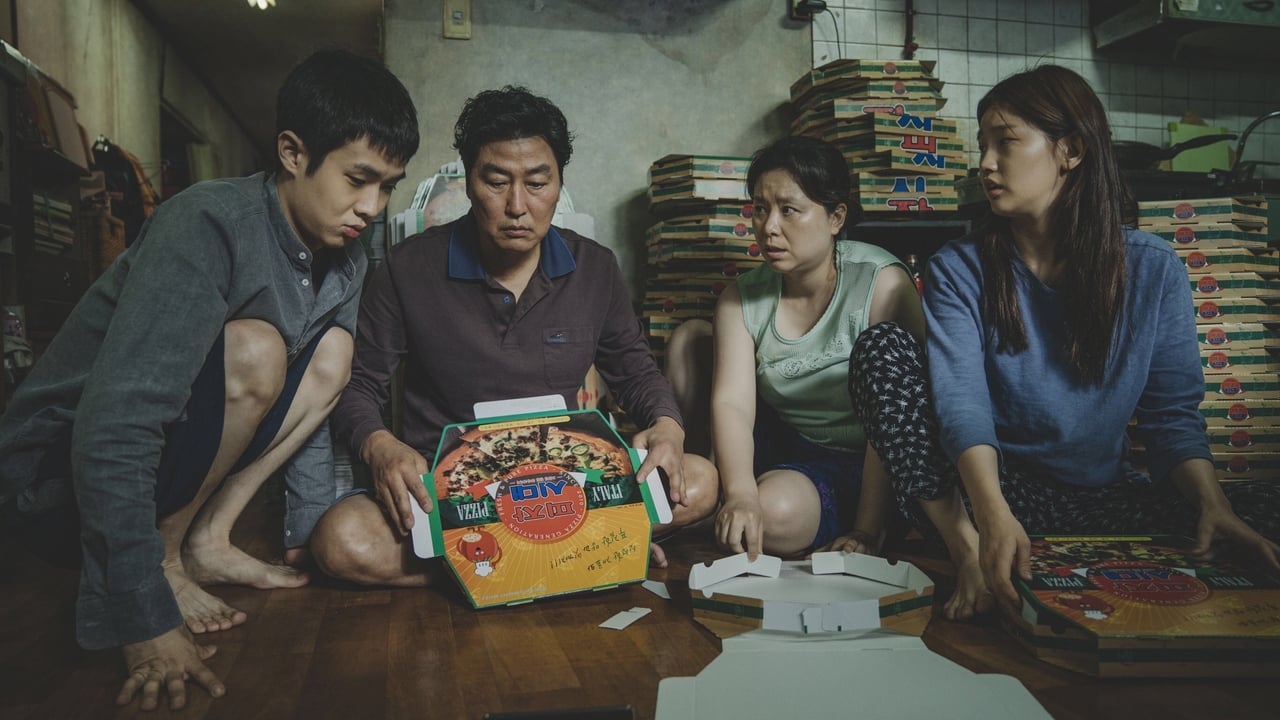
Parasite grabs you right from the beginning, as we’re introduced to the struggling Kim family. Ki-taek (Song Kang-ho) and his wife Chung-sook (Jang Hye-jin) live in a semi-basement apartment, scraping by on odd jobs. When their son, Ki-woo (Choi Woo-shik), gets a job as an English tutor for the wealthy Park family, it sets off a series of events that lead to unexpected consequences. As Ki-woo schemes to get his family into the Parks’ employ, the film shifts from dark comedy to thrilling drama.
What makes it compelling is the gradual reveal of the Kims' infiltration into the affluent lifestyle of the Parks, played beautifully by Lee Sun-kyun and Cho Yeo-jeong. Their dynamic is fascinating, and the contrast between the two families is stark. The film cleverly builds tension, leading to moments that are at once laugh-out-loud funny and deeply unsettling. In a pivotal scene at a garden party, the class division is thrown into sharp relief when a single rainstorm exposes the fragile foundations of both families.
As the plot unfolds, we see how the Kims become more entangled with the Parks, and the stakes grow higher. I kept waiting for a major twist, and when it finally came in the second act, it turned the entire narrative on its head. The emotional arc deepens as the characters grapple with their desires and the consequences of their actions, drawing the viewer into an ever-thickening web of lies.
By the final act, the film escalates into chaos, and I wasn't expecting the level of violence and heartbreak that ensued. What stayed with me after the credits was the haunting realization of how blind ambition can lead to tragedy, leaving the viewer contemplating the lengths one might go to escape poverty.
Direction & Cinematography
Bong Joon-ho’s direction stands out in Parasite, particularly in how he frames the contrast between the two families. A striking moment occurs when the camera follows Ki-woo as he climbs the stairs of the Park household, emphasizing the literal and metaphorical elevation from poverty to wealth. The pacing shifts seamlessly from light-hearted comedy to suspenseful drama, which keeps the audience on edge.
What surprised me most was how Bong balances humor with darker themes. One scene in particular, where the Kims hide in the Park home while the family enjoys a dinner party upstairs, showcases not only his talent for building tension but also his ability to make the absurd feel relatable. The interactions are staged with precision, creating an atmosphere that amplifies the underlying discord.
But it’s not just the framing that impresses; the shifts in tone are meticulously crafted. Early on, laughter fills the screen, but as the plot thickens, the humor gives way to discomfort. Bong’s control over this tonal shift was so effective that it left me feeling uncomfortable yet wholly absorbed in the unfolding drama – a testament to his directorial skill.
Cast & Performances
Song Kang-ho embodies Ki-taek’s complex character masterfully, often using subtle physical choices to convey burdensome emotions. In one scene, when he watches his son interact with the Parks, the weight of his own dreams and disappointments is palpable in his posture. It struck me how effortlessly he balances humor and despair.
Lee Sun-kyun as Mr. Park presents a much different energy. His performance is marked by an air of arrogance and privilege, especially during interactions with the Kims. I’ll admit I didn’t expect him to deliver such a layered performance, but his transformation from a seemingly benign host to a character steeped in obliviousness was compelling.
Then there’s Cho Yeo-jeong as Mrs. Park, who plays the role of the wealthy matriarch with a convincing blend of naivety and charm. In one scene, her delighted response to Ki-woo's artful tutoring shows her to be almost child-like in her belief in the goodness of the world. Yet, her oblivion to the struggles around her feels slightly exaggerated at times, which bothered me slightly, pulling me out of the moment.
Character Psychology
Ki-taek desires more than just survival; he craves respect and stability for his family. Yet, beneath that ambition lies a deep-seated awareness of his place in society, making him a complex character to navigate. He struggles internally with his role as the patriarch, often resulting in conflicting decisions that ultimately lead to tragedy.
What he needs, though, is a clearer understanding of the moral implications of his actions. Ki-taek doesn’t fully realize the depths he’s willing to sink to achieve a better life, and by the film's climax, it becomes evident that his inability to change or accept his reality seals his family's fate. I kept thinking about how awareness doesn’t guarantee change — a harsh truth that echoes throughout the film.
Themes & Emotional Depth
Parasite is fundamentally about class and the illusion of mobility. The film deftly illustrates this through the visual contrast between the Kims’ dark, cramped living conditions and the bright, sprawling Park residence. In a particularly telling moment, Ki-taek looks up from his semi-basement to the light streaming from the Parks’ home, representing that unreachable wealth and happiness.
Moreover, the film critiques the seductive nature of wealth and how it blinds individuals to the realities of others. The Kims, in their desperation, become almost parasitic, reflecting how the need for survival can corrupt one’s morals. The poignant ending highlights just how entrenched this divide is, leaving the viewer questioning their own perceptions of success and entitlement.
Memorable Scenes & Dialogue
One standout moment is the birthday party for the Parks’ son, where chaos erupts as the storm hits. The camera captures the contrast between the Kims celebrating their newfound fortune and the panic of the Parks, effectively symbolizing the fragility of their social worlds.
Another powerful scene occurs when Ki-taek confronts Mr. Park in the climax. The tension between them, fueled by class resentment and desperation, unfolds in a way that feels inevitable yet shocking. The staging, with both characters isolated in different parts of the frame, underscores the emotional distance despite their physical proximity.
Finally, the closing shot of the film leaves a haunting impression. As Ki-taek gazes at the Park house, the realization of his unattainable dream is palpable. It serves as a stark reminder of the class divide that will forever separate him and his family from that life.
The Ending — Does It Deliver?
The climax of Parasite feels earned, as the tension has been building throughout the film, driven by the characters' motivations and choices. The shocking escalation of violence didn’t feel gratuitous; it was a culmination of the characters’ desperate circumstances. The moment when the hidden truths come to light is both gratifying and horrifying, leaving me breathless.
By the end, the final shot of Ki-taek looking at the Park house left me with a sense of despair. His dream feels more like a curse than a blessing, encapsulating the film’s commentary on class struggle. It’s a haunting image that lingers long after the credits roll.
What Works
What stands out in Parasite is its ability to balance humor with a critique of class disparities. The way Bong Joon-ho weaves comedic moments, like Ki-woo's enthusiastic tutoring sessions, with tense scenes contrasts the characters' desperate ambitions. Additionally, the performances, especially by Song Kang-ho, add depth to the emotional stakes, particularly when his character’s dreams clash with harsh realities. Each shot is carefully crafted to heighten tension and reveal character depth, making the viewing experience incredibly rich.
Honest Criticism
While the film is largely successful, the subplot involving the secret bunker beneath the Park house feels somewhat uneven. Initially introduced as a thrilling revelation, it sometimes distracts from the main narrative thrust. The character of the previous housekeeper could have been developed more, as her role ultimately feels underutilized despite the initial impact. This minor flaw makes some of the later events feel less cohesive, detracting slightly from the overall seamlessness of the story.
How It Compares
Parasite stands alongside films like Snowpiercer and The Host, both also directed by Bong Joon-ho, but it truly excels in its ability to blend genres and deliver social commentary. While Snowpiercer tackles class issues in a more overtly allegorical way, Parasite’s grounded story makes the themes feel immediate and relatable. Moreover, unlike The Host, which leans heavily on genre conventions, Parasite cleverly uses dark humor to draw in the audience before it subverts expectations with its darker turns.
However, unlike films such as The Square, which can feel overly abstract in its critique of capitalism, Parasite offers a more visceral and emotional experience that keeps you engaged until the last frame.
Legacy & Cultural Impact
Parasite made history by winning the Palme d'Or at the Cannes Film Festival and being the first non-English language film to win the Academy Award for Best Picture. It grossed over $258 million worldwide against a modest budget, proving that global audiences are hungry for diverse stories. The film sparked conversations about class disparities and representation in cinema, influencing filmmakers to explore themes of identity and social justice in new ways.
Its impact on the genre is evident, as it has inspired a new wave of films blending humor with social commentary, encouraging a broader exploration of societal issues in mainstream cinema.
Behind the Scenes
In a last-minute decision, Bong Joon-ho cast Cho Yeo-jeong after a previous actress dropped out. The film was shot over a short period, and the complex production faced scheduling challenges due to the actors’ commitments. The original script featured more backstory for the housekeeper, which was ultimately cut to streamline the narrative.
Interestingly, the set for the Kim family's home was built entirely for the film, as the production team wanted to create a specific atmosphere to enhance the story’s themes.
Who Should Watch It?
Viewers who enjoy dark comedies mixed with social commentary will love this film, especially those who appreciate character-driven narratives. Fans of Bong Joon-ho’s previous films will find much to enjoy about the unique storytelling style. However, those looking for a straightforward comedy or light-hearted entertainment might find Parasite too heavy and unsettling. It’s definitely not for everyone.
Final Verdict
Parasite is a thought-provoking film that brilliantly explores class divides through a gripping narrative and rich characterizations. The blend of dark humor and social commentary makes it a must-watch for cinephiles. Despite a few minor flaws in pacing, the film succeeds in delivering a powerful message that lingers long after viewing. For those ready to engage with complex themes, this one is not to be missed.
More details, ratings, and cast information on IMDb, TMDB, Wikipedia. Watch the official trailer on YouTube →